Energy-Efficient Home Tech: Reduce Your Carbon Footprint by 20%
Advertisements
United States residents can reduce their carbon footprint by 20% this year through four simple, strategic energy-efficient home tech upgrades, leading to both environmental benefits and significant cost savings on utility bills.
Are you a United States resident looking to make a tangible difference in your household’s environmental impact? Embracing energy-efficient home tech is not just a trend; it’s a powerful strategy that can help you significantly reduce your carbon footprint by an impressive 20% this year. With just four simple yet impactful swaps, you can transform your living space into a greener, more economical haven, contributing positively to both your wallet and the planet.
Understanding your carbon footprint and why it matters
Before diving into specific tech swaps, it’s crucial to grasp what a carbon footprint truly represents and why its reduction is paramount. Your carbon footprint is essentially the total amount of greenhouse gases, primarily carbon dioxide, generated by your actions. In the United States, residential energy consumption accounts for a substantial portion of these emissions, stemming from everything like heating, cooling, lighting, and powering appliances. Every kilowatt-hour of electricity consumed that comes from fossil fuels adds to this global challenge. Therefore, making conscious choices about energy use at home directly translates into a smaller environmental impact.
Reducing your carbon footprint isn’t solely about environmental altruism; it also offers tangible benefits for homeowners. Lower energy consumption leads to reduced utility bills, freeing up household income for other priorities. Furthermore, many energy-efficient upgrades increase a home’s value and can qualify for various government incentives or rebates, making the initial investment even more attractive. The collective action of millions of households making these changes can drive significant national progress towards sustainability goals, fostering a healthier future for all.
The impact of household energy consumption
- Electricity Generation: A significant portion of electricity in the U.S. is still generated by burning fossil fuels, releasing greenhouse gases.
- Heating and Cooling: These systems are often the largest energy consumers in a home, contributing heavily to emissions.
- Appliance Usage: Older or inefficient appliances can consume excessive power, adding to the overall carbon output.
Understanding these key areas allows homeowners to target their efforts effectively. By focusing on the biggest energy drains, the impact of each energy-efficient upgrade becomes amplified, leading to quicker returns on investment and a more substantial reduction in carbon emissions. This targeted approach ensures that the efforts are not just symbolic but genuinely transformative for the environment and personal finances. The journey to a more sustainable home begins with this foundational understanding of energy dynamics.
Swap 1: Upgrade to smart thermostats for optimized climate control
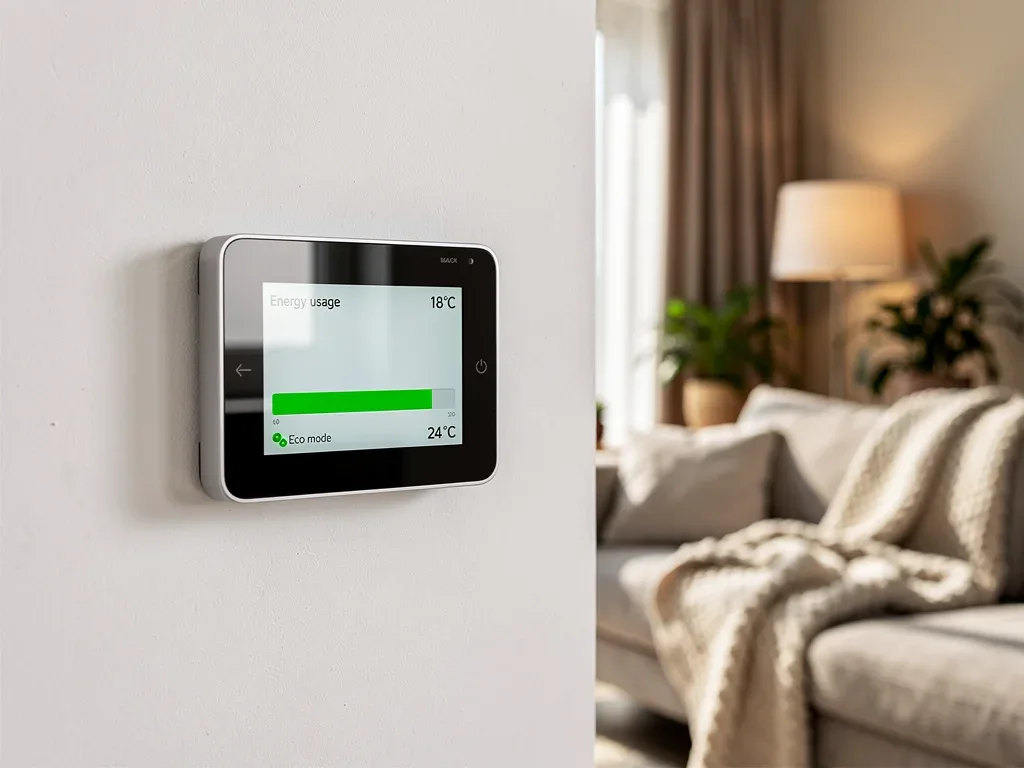
One of the most impactful changes United States residents can make is upgrading their traditional thermostat to a smart thermostat. These devices go far beyond simple temperature scheduling, offering advanced features that learn your habits, sense occupancy, and even integrate with weather forecasts to optimize your home’s heating and cooling. Since HVAC systems are typically the largest energy consumers in a home, gaining intelligent control over them can yield significant energy savings and carbon footprint reduction.
Smart thermostats provide unparalleled convenience, allowing you to control your home’s climate from anywhere via a smartphone app. This means you can adjust the temperature before you arrive home, ensuring comfort without wasting energy when the house is empty. Many models also provide detailed energy usage reports, empowering you to identify patterns and make further adjustments. The ability to fine-tune your home’s climate control precisely means less wasted energy and a smaller environmental impact.
Key features and benefits
- Learning algorithms: Smart thermostats learn your preferences and create optimized schedules automatically.
- Remote access: Control your home’s temperature from anywhere using your smartphone or tablet.
- Occupancy sensors: Some models detect when you’re home or away, adjusting temperatures accordingly to save energy.
- Energy reporting: Gain insights into your energy consumption patterns to make informed decisions.
The return on investment for a smart thermostat can be surprisingly quick, often within one to two years, due to the substantial savings on heating and cooling bills. Beyond the financial benefits, the peace of mind knowing you’re actively contributing to a healthier planet by reducing your home’s energy demand is invaluable. This single swap lays a strong foundation for a more energy-efficient and environmentally responsible household, showcasing the power of intelligent technology.
Swap 2: Embrace LED lighting throughout your home
Transitioning to LED lighting (Light Emitting Diode) is perhaps the simplest and most accessible energy-efficient home tech swap available to United States residents. While seemingly small, the cumulative effect of replacing incandescent or even CFL bulbs with LEDs across an entire household is profound. LEDs consume significantly less electricity, last exponentially longer, and produce very little heat, making them a superior choice for both energy efficiency and longevity.
The evolution of LED technology has brought about a wide range of options, from warm white to cool daylight, and even color-changing smart bulbs that can be controlled via apps or voice commands. This means you don’t have to sacrifice ambiance or functionality for efficiency. In fact, many people find the quality of light from modern LEDs to be superior, providing brighter, more consistent illumination. The immediate reduction in electricity consumption for lighting alone contributes noticeably to a lower carbon footprint.
Why LEDs are a bright idea
- Energy efficiency: Use 75% less energy than incandescent bulbs.
- Extended lifespan: Last 25 times longer than traditional bulbs, reducing waste and replacement frequency.
- Durability: More resistant to breakage and vibrations.
- Instant on: Provide full brightness immediately, unlike some CFLs.
Beyond the direct energy savings, the reduced need for frequent bulb replacements means less manufacturing and transportation of new bulbs, further diminishing environmental impact. The initial cost of LEDs has also decreased considerably over the years, making them an affordable upgrade for every home. By swapping out old bulbs for LEDs, you’re not just saving money; you’re making a clear statement about your commitment to a sustainable lifestyle, one light bulb at a time.
Swap 3: Invest in ENERGY STAR certified appliances
When it’s time to replace an aging refrigerator, washing machine, dishwasher, or any other major appliance, choosing an ENERGY STAR certified model is a critical step towards reducing your carbon footprint. ENERGY STAR is a U.S. Environmental Protection Agency (EPA) program that identifies and promotes energy-efficient products, helping businesses and individuals save money and protect the environment through superior energy performance. These appliances are designed to consume significantly less energy than conventional models.
The impact of ENERGY STAR appliances is substantial because major appliances are often continuous or heavy energy users. For instance, an old refrigerator can be a constant drain on your electricity bill, while an ENERGY STAR certified model can cut that consumption dramatically. Similarly, energy-efficient washing machines and dishwashers use less water in addition to less electricity, contributing to overall resource conservation. This dual benefit of energy and water savings amplifies their positive environmental effect.
Benefits of ENERGY STAR appliances
- Lower utility bills: Significant savings on electricity and, for some appliances, water.
- Reduced carbon emissions: Less energy consumption means a smaller environmental footprint.
- Enhanced performance: Often incorporate advanced technologies for better functionality.
- Government incentives: Many states and local utilities offer rebates or tax credits for purchasing ENERGY STAR products.
While the upfront cost of an ENERGY STAR appliance might sometimes be slightly higher than a non-certified model, the long-term savings on utility bills typically offset this difference, often within a few years. Furthermore, the peace of mind that comes from knowing your household is operating with peak efficiency and contributing to a healthier environment makes the investment truly worthwhile. Prioritizing ENERGY STAR certified products during appliance upgrades is a smart move for any environmentally conscious homeowner.
Swap 4: Integrate smart power strips and energy monitors
The phenomenon of ‘vampire drain’ or ‘phantom load’ is a silent energy thief in many United States homes. This refers to the electricity consumed by electronics and appliances even when they are turned off but still plugged in. Devices like televisions, phone chargers, coffee makers, and computers continue to draw power in standby mode, collectively adding up to a surprising amount of wasted energy and an unnecessary contribution to your carbon footprint. Smart power strips and energy monitors offer simple yet effective solutions to combat this.
Smart power strips can detect when a device is no longer in use and automatically cut power to it, eliminating standby consumption. Some even allow for scheduling or remote control via an app, giving you precise command over power usage. Energy monitors, on the other hand, provide real-time data on how much electricity specific devices or your entire home are consuming. This visibility is incredibly empowering, as it highlights where energy is being wasted and helps you identify areas for further optimization, turning abstract consumption into actionable insights.
Controlling phantom load with smart tech
One of the biggest advantages of these technologies is their ease of implementation. Smart power strips simply plug into existing outlets, and devices then plug into the strip. Energy monitors can be installed at the breaker box or as individual plug-in units for specific appliances. This accessibility means virtually anyone can start reducing their phantom load without needing complex installations or technical expertise. The cumulative savings from eliminating vampire drain across numerous devices can be quite significant over the course of a year, directly contributing to your 20% carbon footprint reduction goal.
Beyond the measurable energy savings, integrating smart power strips and energy monitors fosters a greater awareness of household energy consumption. This awareness often leads to more conscious energy habits overall, such as unplugging devices that aren’t in regular use or being more mindful about leaving lights on. These small, daily changes, driven by the insights from smart tech, create a ripple effect of environmental responsibility and financial prudence within the home. It’s a proactive step towards total energy mastery.
Maximizing your energy efficiency efforts
While the four core swaps – smart thermostats, LED lighting, ENERGY STAR appliances, and smart power strips – form a powerful foundation for reducing your carbon footprint by 20%, maximizing your energy efficiency efforts involves a broader approach. These additional strategies can further amplify your savings and environmental impact, ensuring your home is as eco-friendly as possible. It’s about creating a holistic system where every component works in harmony to conserve energy.
Consider conducting a home energy audit, either professionally or as a DIY project. An audit can pinpoint specific areas of energy loss, such as drafts around windows and doors, insufficient insulation, or inefficient water heaters. Addressing these structural issues can provide substantial long-term benefits that complement your tech upgrades. Many utility companies in the United States offer free or subsidized energy audits, making this an accessible and valuable step towards comprehensive energy management.
Beyond the four core swaps
- Improve home insulation: Proper insulation in attics, walls, and floors prevents heat loss in winter and heat gain in summer.
- Seal air leaks: Use caulk and weatherstripping to seal gaps around windows, doors, and utility penetrations.
- Upgrade windows: Consider double-pane or low-emissivity (Low-E) windows for superior thermal performance.
- Optimize water heating: Insulate your water heater and pipes, or consider a tankless water heater for on-demand hot water.
Furthermore, cultivating mindful energy habits among all household members is crucial. Simple actions like turning off lights when leaving a room, taking shorter showers, and air-drying clothes when possible can collectively make a big difference. Educating your family about the importance of energy conservation reinforces the positive impact of your tech upgrades. By combining smart technology with smart habits and structural improvements, United States residents can achieve and even surpass their goal of reducing their carbon footprint by 20% this year, creating a truly sustainable home environment.
| Key Swap | Brief Description |
|---|---|
| Smart Thermostats | Intelligently manage HVAC systems for optimal energy use and remote control. |
| LED Lighting | Replace old bulbs with LEDs for significant energy savings and longer lifespan. |
| ENERGY STAR Appliances | Choose certified appliances to reduce electricity and water consumption. |
| Smart Power Strips | Eliminate ‘vampire drain’ by automatically cutting power to idle electronics. |
Frequently asked questions about energy-efficient home tech
What is the most effective energy-efficient swap for immediate savings?▼Upgrading to LED lighting is often the most effective for immediate savings. It’s a low-cost, easy-to-implement change that significantly reduces electricity consumption for illumination, which can be a substantial portion of a home’s energy use, leading to noticeable reductions in utility bills right away.
How much can ENERGY STAR appliances really save?▼ENERGY STAR certified appliances can save a significant amount, often 10-50% more efficient than conventional models. Over their lifespan, these savings can amount to hundreds or even thousands of dollars on utility bills, depending on the appliance and its usage. They also contribute to a greener environment.
Are smart thermostats difficult to install?▼Most smart thermostats are designed for relatively easy DIY installation, often taking less than an hour. However, if your home’s wiring is complex or you’re uncomfortable with electrical work, professional installation is recommended to ensure proper functioning and safety, maximizing their energy-saving potential.
What is ‘vampire drain’ and how do smart power strips help?▼‘Vampire drain’ is the power consumed by electronics when they are off but still plugged in. Smart power strips combat this by automatically cutting power to idle devices, completely eliminating this standby consumption and saving energy that would otherwise be wasted. This is a simple, effective solution.
Can these swaps truly reduce my carbon footprint by 20%?▼Yes, strategically implementing these four swaps can collectively lead to a 20% reduction or more in your household’s carbon footprint. The exact percentage depends on your current energy consumption and the efficiency of your old devices, but the cumulative effect of these upgrades is substantial for any U.S. resident.
Conclusion
Embracing energy-efficient home tech is not just a futuristic ideal; it’s a present-day imperative for United States residents aiming to reduce their environmental impact and save money. By focusing on four simple yet powerful swaps – smart thermostats, LED lighting, ENERGY STAR certified appliances, and smart power strips – households can realistically achieve a 20% reduction in their carbon footprint this year. These technologies offer a compelling blend of convenience, cost savings, and environmental responsibility, making the transition to a greener lifestyle both accessible and rewarding. Beyond these initial upgrades, a holistic approach involving home energy audits and mindful consumption habits will further amplify your positive impact, paving the way for a more sustainable and economically sound future for your home and the planet.