Kitchen Tech: 3 Appliances Saving US Households 15% on Energy Bills by 2027
Advertisements
Advanced kitchen technology is rapidly evolving, with three specific appliances expected to help United States households cut energy consumption by 15% on energy bills by 2027, promoting both ecological benefits and economic advantages.
The culinary landscape is undergoing a significant transformation, driven by innovations designed to make our lives easier and, crucially, our homes more energy-efficient. As we look towards 2027, a new wave of kitchen appliances promises not only to elevate our cooking experience but also to deliver substantial savings on utility bills. This article explores the latest in kitchen tech: 3 appliances that will save United States households 15% on energy bills by 2027, highlighting their features, benefits, and the impact they will have on our daily routines and wallets.
The Rise of Smart Induction Ranges: Precision and Efficiency Redefined
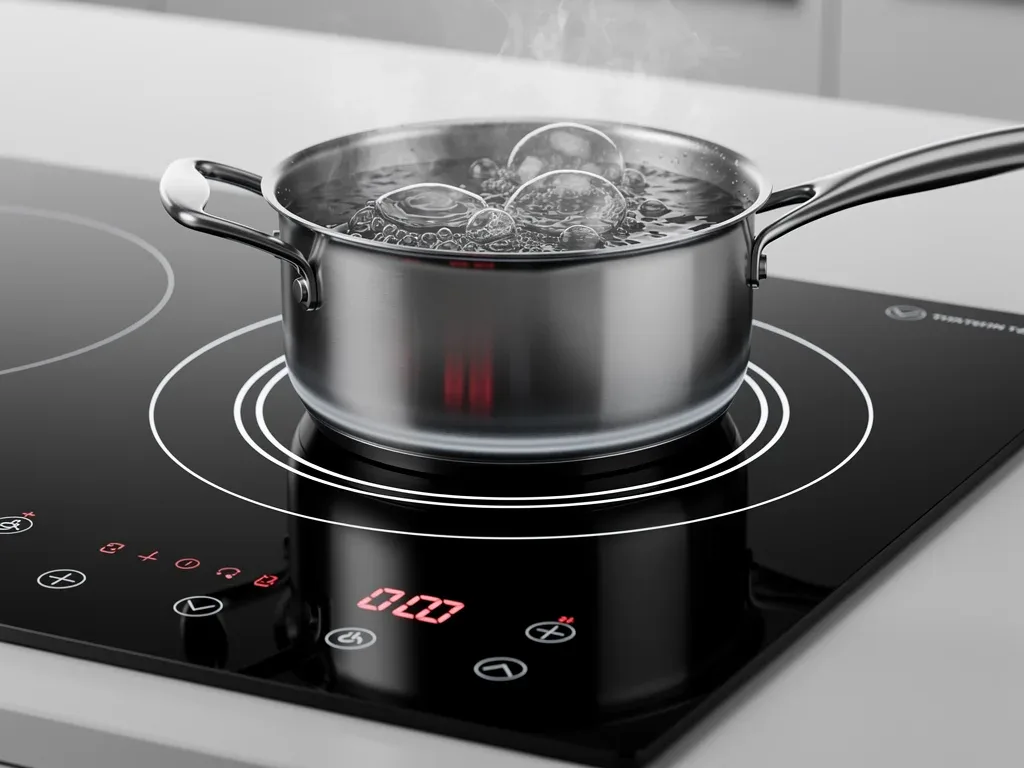
Induction cooking has been around for some time, but modern smart induction ranges are a league of their own. These appliances are not just about faster cooking; they represent a fundamental shift in how we think about energy consumption in the kitchen. By directly heating the cookware through electromagnetic fields, induction technology minimizes heat loss, making it significantly more efficient than traditional electric or gas stoves.
The latest models integrate advanced sensors and connectivity, allowing for unparalleled precision and control. Imagine setting an exact temperature for simmering, or having your range communicate with your smart ventilation system to optimize air quality. This level of integration contributes directly to energy savings by preventing overheating and ensuring that energy is used only when and where it’s needed.
Advanced Features for Optimal Energy Use
- Precise Temperature Control: Induction ranges offer instant and accurate temperature adjustments, preventing energy waste from prolonged heating or cooling cycles.
- Pan Detection Technology: Heat is only generated when a compatible pot or pan is placed on the burner, automatically shutting off when cookware is removed.
- Wi-Fi Connectivity: Remote monitoring and control allow users to preheat or turn off the range from anywhere, optimizing cooking times and energy usage.
- Power Boost Functions: Rapid boiling capabilities reduce cooking time, minimizing the duration of energy consumption.
Beyond the immediate energy savings, smart induction ranges often feature self-cleaning modes that are more efficient than older models, further reducing the overall energy footprint. Their sleek designs and easy-to-clean surfaces also contribute to a more modern and functional kitchen environment. The shift towards induction is not just a trend; it’s a strategic move towards a more sustainable and cost-effective culinary future for American households.
Next-Generation Smart Refrigerators: Keeping Cool While Cutting Costs
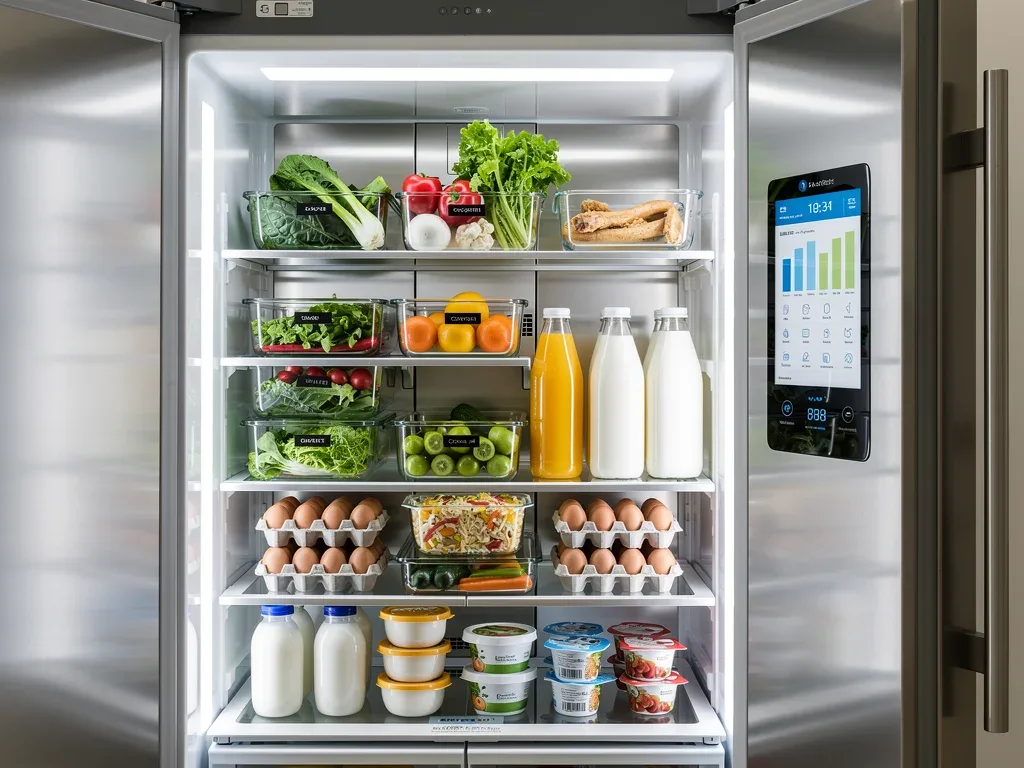
Refrigerators are often considered one of the biggest energy consumers in any household, running 24/7. However, the latest generation of smart refrigerators is designed to challenge this notion, incorporating innovative technologies that dramatically reduce energy consumption. These aren’t just refrigerators with touchscreens; they are intelligent systems that learn your habits, optimize cooling, and provide real-time insights into energy use.
One of the most significant advancements is the integration of advanced insulation materials and variable-speed compressors. Unlike older models that constantly cycle on and off at full power, these new compressors adjust their speed based on cooling demand, leading to more consistent temperatures and less energy waste. Coupled with smart sensors that monitor door openings and internal temperatures, these refrigerators ensure optimal performance with minimal energy expenditure.
Intelligent Cooling and Smart Management
Modern smart refrigerators go beyond basic cooling. They incorporate features designed to actively reduce energy consumption and improve food preservation. These innovations are critical for achieving the projected 15% energy savings for United States households.
One key aspect is their ability to adapt to usage patterns. For instance, some models can sense when you’re likely to open the door frequently, pre-cooling the interior to minimize temperature fluctuations. This proactive approach significantly reduces the energy required to bring the temperature back down after the door is closed. Furthermore, many smart refrigerators come equipped with advanced diagnostic tools that can identify potential issues before they become major problems, ensuring the appliance operates at peak efficiency for longer. This proactive maintenance not only saves energy but also extends the lifespan of the unit, offering long-term value.
- Adaptive Cooling Technology: These refrigerators learn user habits, adjusting cooling cycles to anticipate peak usage times and minimize energy expenditure during off-peak hours.
- Door-in-Door and Dual Zone Systems: These features reduce the escape of cold air when accessing frequently used items, maintaining internal temperatures more effectively.
- Internal Cameras and Inventory Management: By allowing users to view contents remotely, unnecessary door openings are reduced, preserving cold air and saving energy.
- Energy Monitoring Dashboards: Integrated displays or companion apps provide users with real-time data on energy consumption, empowering them to make informed choices.
The combination of these intelligent features means that smart refrigerators are not just storing food; they are actively managing energy to ensure both freshness and efficiency. For households looking to make a substantial impact on their energy bills, upgrading to a smart refrigerator is becoming an increasingly compelling option.
High-Efficiency Smart Dishwashers: Sparkling Clean with Less Water and Power
Dishwashers have long been a convenience, but older models were often notorious for their water and energy consumption. Today’s high-efficiency smart dishwashers are engineered to deliver superior cleaning performance while drastically reducing both resource usage and utility costs. These appliances are a prime example of how thoughtful design and advanced technology can contribute to significant household savings.
Central to their efficiency is the use of advanced sensor technology that detects soil levels and adjusts water temperature, pressure, and cycle duration accordingly. This means the dishwasher only uses the precise amount of water and energy required for each load, avoiding the waste associated with fixed, pre-set cycles. Furthermore, innovative spray arm designs and targeted washing zones ensure comprehensive cleaning without needing excessive water or detergent.
Optimized Cycles and Connectivity for Eco-Friendly Cleaning
The evolution of smart dishwashers has focused on maximizing cleaning power while minimizing environmental impact and operational costs. These advancements are crucial for achieving overall household energy savings.
Many high-efficiency dishwashers now feature soil sensors that automatically determine how dirty the dishes are and adjust the wash cycle accordingly. This intelligent sensing prevents the use of unnecessarily long or hot cycles for lightly soiled loads, saving both water and electricity. Additionally, improved filtration systems remove food particles more effectively, preventing them from being redeposited on dishes and ensuring a cleaner result without the need for multiple rinses. The integration of advanced drying technologies, such as zeolite drying or fan-assisted drying, further reduces energy consumption by eliminating the need for a traditional heated drying element. These innovations collectively contribute to a dramatically more efficient appliance.
- Soil Sensors: Automatically detect the level of grime on dishes and adjust water usage and cycle intensity, ensuring optimal cleaning with minimal resources.
- Eco-Friendly Wash Cycles: Dedicated settings for energy and water conservation, often leveraging lower temperatures and shorter durations for lightly soiled loads.
- Delayed Start Options: Allows users to run the dishwasher during off-peak energy hours, taking advantage of lower electricity rates.
- Smart Connectivity: Enables remote monitoring, cycle customization, and push notifications for maintenance, ensuring the dishwasher operates at peak efficiency.
By investing in a high-efficiency smart dishwasher, households can enjoy the convenience of automated dishwashing without the guilt of excessive resource consumption. These appliances are a testament to how smart technology can make everyday chores more sustainable and economical.
The Synergy of Smart Kitchens: Beyond Individual Appliances
While each of these three appliances offers substantial individual energy savings, the true power lies in their potential for synergy within a fully integrated smart home ecosystem. Imagine a scenario where your smart refrigerator detects you’re running low on ingredients for a recipe, automatically suggesting optimal cooking times for your smart induction range, and then scheduling your smart dishwasher to run during off-peak electricity hours once dinner is done. This interconnectedness is where the future of household energy savings truly shines.
Smart kitchen platforms, often controlled via a central hub or a smartphone app, allow these devices to communicate and coordinate their functions. This not only streamlines daily tasks but also optimizes energy usage across the entire kitchen. For example, a smart oven could preheat based on a recipe from a smart display, while the smart dishwasher automatically adjusts its cycle based on the type of cookware used. This holistic approach ensures that every appliance works in harmony to reduce overall energy consumption.
Integrated Control and Predictive Energy Management
The concept of a connected kitchen moves beyond individual appliance benefits, creating a network that intelligently manages energy. This integrated system is fundamental to achieving the ambitious 15% energy reduction target for US households.
One of the most exciting aspects of this synergy is predictive energy management. By analyzing usage patterns, local energy prices, and even weather forecasts, a smart kitchen system can make informed decisions about when and how to operate appliances. For instance, it might suggest running the dishwasher overnight when electricity rates are lower, or pre-cooling the refrigerator more intensely during periods of abundant renewable energy. This level of automation and optimization removes the burden from homeowners, allowing them to save energy without constant manual intervention. The integration extends to voice control and AI assistants, making the management of these complex systems intuitive and accessible, further encouraging their adoption and maximizing their energy-saving potential.
- Centralized Control Hubs: Manage all smart kitchen appliances from a single interface, optimizing schedules and energy settings.
- Energy Consumption Tracking: Monitor real-time energy usage across all connected devices, identifying areas for further savings.
- Automated Scheduling: Program appliances to operate during off-peak energy hours, leveraging lower utility rates.
- Recipe Integration: Smart appliances can communicate with each other to optimize cooking processes, ensuring efficient energy use from preparation to cleanup.
The smart kitchen is not just about convenience; it’s about creating an intelligent ecosystem that actively contributes to a more sustainable and economically sound household. The collective impact of these interconnected devices is far greater than the sum of their individual parts.
Government Initiatives and Consumer Adoption: Driving the Change
The widespread adoption of these energy-saving kitchen technologies isn’t happening in a vacuum. Government initiatives and evolving consumer preferences are playing crucial roles in accelerating this transition. Programs like ENERGY STAR, which certifies products meeting strict energy efficiency guidelines, provide consumers with clear benchmarks for making informed purchasing decisions. Tax credits and rebates for energy-efficient appliance upgrades further incentivize households to invest in these advanced technologies.
Beyond financial incentives, there’s a growing consumer awareness about environmental impact and the long-term cost benefits of energy-efficient living. Younger generations, in particular, are prioritizing sustainability and smart home integration, driving demand for appliances that align with these values. Manufacturers are responding by continuously innovating and making these technologies more accessible and affordable.
Policies and Preferences Shaping the Market
The push for energy efficiency in household appliances is a multi-faceted effort, involving both top-down policy decisions and bottom-up consumer demand. These forces are converging to create a robust market for innovative kitchen tech.

Federal and state governments in the United States are increasingly setting stricter energy efficiency standards for appliances, effectively phasing out older, less efficient models. This regulatory pressure compels manufacturers to invest in research and development, leading to continuous improvements in energy-saving technologies. Concurrently, consumer education campaigns highlight the financial and environmental benefits of upgrading to energy-efficient appliances, shifting public perception and encouraging wider adoption. The rise of smart home ecosystems has also made these appliances more appealing, as they integrate seamlessly into a broader network of connected devices, offering convenience alongside savings. This dual approach of regulation and consumer empowerment is essential for driving significant change in household energy consumption.
- ENERGY STAR Certification: A trusted symbol for energy efficiency, guiding consumers towards high-performing appliances.
- Tax Credits and Rebates: Financial incentives from federal and state governments that reduce the upfront cost of energy-efficient upgrades.
- Consumer Education: Campaigns that raise awareness about the long-term savings and environmental benefits of smart appliances.
- Manufacturing Innovation: Driven by both demand and regulation, leading to continuous improvements in appliance efficiency and features.
As these factors continue to evolve, the adoption rate of smart, energy-efficient kitchen appliances is expected to surge, paving the way for the projected 15% reduction in household energy bills across the United States by 2027.
Calculating the Impact: How 15% Savings Translate to Real Benefits
A 15% reduction in energy bills for United States households by 2027 is a significant figure, translating into tangible financial and environmental benefits. For the average American household, this could mean hundreds of dollars saved annually, money that can be reallocated to other essential expenses or investments. Over several years, these savings accumulate, providing a substantial return on the initial investment in smart appliances.
Beyond the individual household level, the collective impact is even more profound. A nationwide 15% reduction in energy consumption from kitchen appliances would lead to a substantial decrease in carbon emissions, contributing significantly to national climate goals. It would also reduce the strain on the national power grid, enhancing energy security and stability. This ripple effect underscores the importance of embracing these technological advancements not just for personal gain, but for broader societal and environmental well-being.
Economic and Environmental Dividends
The projected energy savings are not merely statistical; they represent a concrete improvement in both household finances and ecological health. Understanding these benefits is key to appreciating the value of investing in modern kitchen tech.
From an economic standpoint, the cumulative savings from reduced energy consumption can free up disposable income for families, stimulating local economies. Lower utility bills also make homeownership more affordable, which is particularly relevant in times of rising living costs. Environmentally, a nationwide reduction in energy use translates directly into fewer greenhouse gas emissions. This contributes to combating climate change, improving air quality, and preserving natural resources. Furthermore, the decreased demand for energy can reduce the need for new power plant construction, avoiding associated environmental impacts. These multifaceted benefits highlight how investing in smart kitchen technology is a win-win situation for both consumers and the planet.
- Direct Financial Savings: Reduced monthly utility bills provide immediate economic relief to households.
- Environmental Stewardship: Lower energy consumption translates to a smaller carbon footprint and reduced greenhouse gas emissions.
- Enhanced Energy Security: Decreased demand on the power grid contributes to a more stable and resilient energy infrastructure.
- Increased Home Value: Energy-efficient appliances can enhance the market value of a home, attracting environmentally conscious buyers.
The 15% energy saving target is not just an arbitrary number; it’s a measurable goal with far-reaching positive implications for millions of American families and the environment they share.
Future Trends and Continued Innovation in Kitchen Tech
The journey towards a fully energy-optimized kitchen doesn’t stop with the current generation of smart appliances. The pace of technological innovation suggests that even greater efficiencies and more integrated solutions are on the horizon. We can anticipate further advancements in artificial intelligence and machine learning being applied to kitchen tech, allowing appliances to become even more intuitive and predictive in their energy management.
Imagine refrigerators that not only track inventory but also suggest recipes based on available ingredients and their expiration dates, optimizing food waste and, by extension, the energy used to produce and store that food. Or ovens that utilize advanced sensor arrays to perfectly cook meals with minimal energy, adapting to the specific properties of each dish. The integration of renewable energy sources directly into kitchen appliances, such as solar-powered charging stations for small gadgets, could also become more commonplace, further decentralizing energy consumption and reducing reliance on the grid.
Emerging Technologies and Sustainable Living
The trajectory of kitchen tech points towards an even more interconnected and intelligent future, where sustainability is not just an add-on feature but an inherent part of appliance design and function.
One exciting area of development is the concept of modular and repairable appliances. As consumers become more conscious of product lifecycles, manufacturers are exploring designs that allow for easier upgrades and repairs, extending the life of appliances and reducing waste associated with premature replacement. Furthermore, advancements in materials science could lead to even more efficient insulation and heating elements, pushing the boundaries of what’s possible in energy conservation. The rise of personalized energy profiles, where appliances adjust their operations based on individual household energy preferences and utility rates, will offer an unprecedented level of customization and control. These future trends promise not only to maintain the momentum of energy savings but to accelerate it, making the kitchen a true hub of sustainable living.
- AI and Machine Learning Integration: Appliances will learn and adapt to user behavior with greater sophistication, optimizing energy use autonomously.
- Advanced Material Science: Development of more efficient insulation and heating elements for even greater energy savings.
- Hyper-Personalization: Appliances will tailor energy consumption based on individual household preferences and dynamic utility pricing.
- Food Waste Reduction Tech: Innovations that help manage food inventory and extend shelf life, indirectly saving energy associated with food production and disposal.
These ongoing innovations underscore a commitment to making our kitchens not just smart, but truly sustainable, ensuring that the benefits of energy efficiency continue to grow well beyond 2027.
| Key Appliance | Energy Saving Impact |
|---|---|
| Smart Induction Ranges | Directly heat cookware, minimizing heat loss and offering precise temperature control, significantly reducing cooking energy. |
| Next-Gen Smart Refrigerators | Utilize adaptive cooling, variable-speed compressors, and smart sensors to optimize energy use based on habits and conditions. |
| High-Efficiency Smart Dishwashers | Employ soil sensors and optimized cycles to use only necessary water and energy, reducing resource consumption per wash. |
| Integrated Smart Kitchens | Synergistic operation of connected appliances, leveraging AI for predictive energy management and overall household optimization. |
Frequently Asked Questions About Kitchen Tech Energy Savings
How do smart induction ranges save more energy than traditional stoves?▼Smart induction ranges use electromagnetic fields to directly heat cookware, minimizing heat loss into the surrounding air. This direct transfer of energy makes them significantly more efficient than gas or traditional electric stoves, which lose a substantial amount of heat during the cooking process, leading to reduced energy consumption and faster cooking times.
What are the key energy-saving features of next-generation smart refrigerators?▼These refrigerators incorporate adaptive cooling technology that learns user habits, variable-speed compressors for precise temperature control, and advanced insulation. Features like door-in-door designs and internal cameras also reduce cold air loss, all contributing to significantly lower energy consumption compared to older models.
Can high-efficiency smart dishwashers really reduce water and energy usage?▼Yes, they can. Modern smart dishwashers utilize soil sensors to detect how dirty dishes are, adjusting water temperature, pressure, and cycle length accordingly. This ensures only the necessary resources are used for each load. Additionally, efficient spray arms and advanced drying technologies further minimize water and electricity consumption.
How will a 15% reduction in energy bills impact United States households by 2027?▼A 15% reduction means substantial financial savings for American families, potentially hundreds of dollars annually. Collectively, this translates to a significant decrease in national carbon emissions, reduced strain on the power grid, and greater energy security, fostering both economic and environmental benefits.
What future innovations can we expect in energy-saving kitchen tech?▼Future innovations include deeper integration of AI and machine learning for predictive energy management, advanced material science for even greater efficiency, and hyper-personalization of appliance operations. We may also see more modular designs for extended product lifespans and direct integration with renewable energy sources.
Conclusion
The rapid evolution of kitchen technology is ushering in an era where convenience, performance, and sustainability converge. The projected 15% energy savings for United States households by 2027, driven by the adoption of smart induction ranges, next-generation smart refrigerators, and high-efficiency smart dishwashers, represents a significant leap forward. These appliances not only promise to make our daily lives more efficient and enjoyable but also offer tangible financial relief and a substantial positive impact on our environmental footprint. As consumers increasingly prioritize smart, sustainable living, the kitchen will undoubtedly remain at the forefront of technological innovation, continuing to deliver both personal and planetary benefits.